Quick Answer
A coffee-machine flow restrictor or gicleur is a small component that meters water, steam or air through a controlled passage. Buyers should not specify only an orifice diameter. Reliable sourcing also requires the medium, pressure, temperature, target flow, orifice length, cleanliness, burr condition and verification method.
A dimensionally acceptable component can still produce unstable flow if the effective opening is reduced by burrs, chips, scale or contamination. The drawing and the functional test must therefore describe the same operating condition.
La Marzocco's public flow-rate check guidance explains that a flow restrictor can become occluded by scale or debris. This service example illustrates why design, manufacturing and water condition all affect the final result.
For very small passages, also read our micro-hole blockage guide and Ø0.11 mm coffee-machine insert case study.
Key Takeaways
- A flow restrictor is a functional metering component, not only a turned part.
- Orifice diameter, length and edge condition influence effective flow.
- Burrs, chips, scale and residues can reduce the open passage.
- Inspection should combine dimensional evidence with functional verification when flow is critical.
- RFQs should state the medium, pressure, temperature and acceptable flow range.
- Production release should be based on a repeatable process, not one successful sample.
What Is a Coffee-Machine Flow Restrictor?
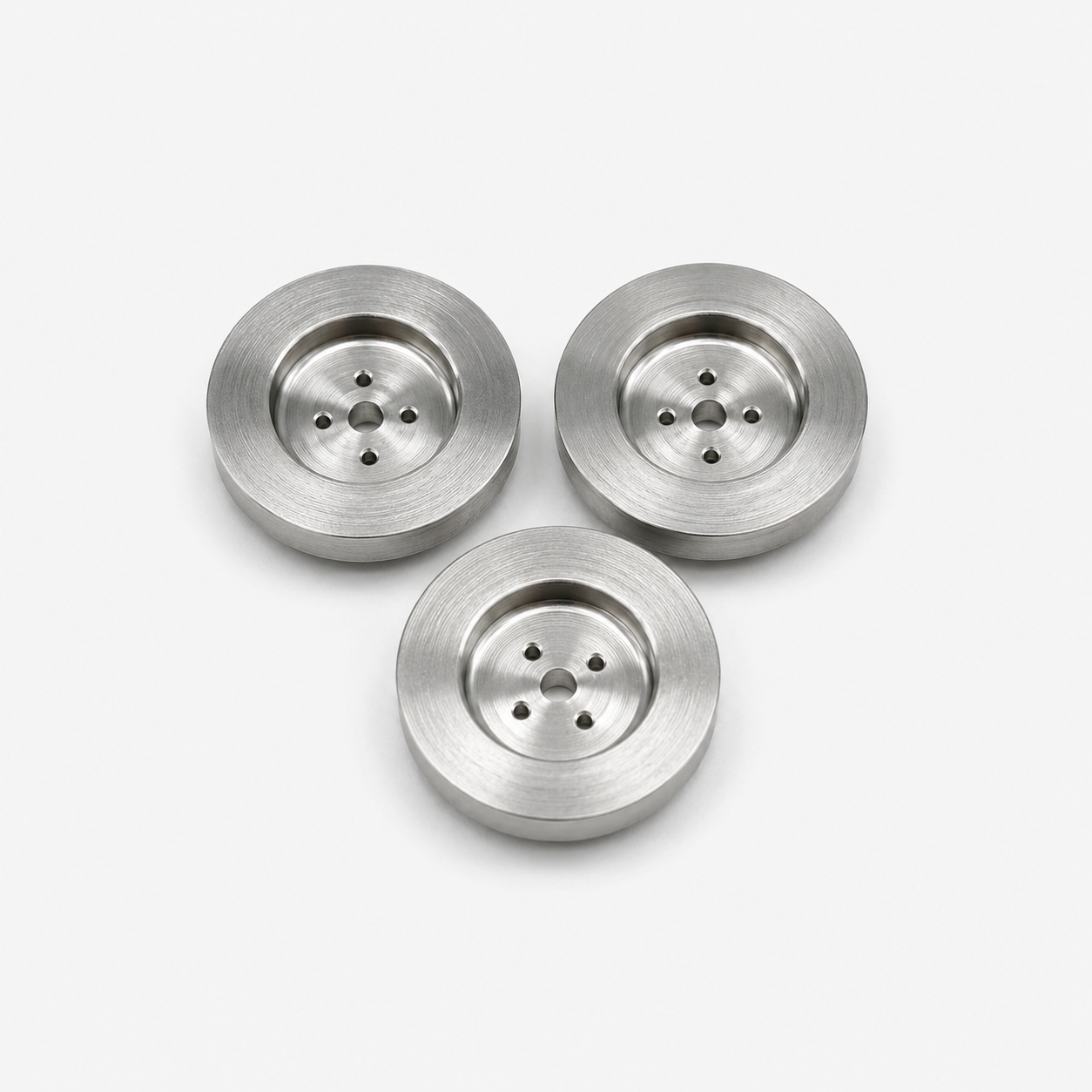
A flow restrictor controls the amount or rate of a medium passing through a coffee-machine circuit. Depending on the machine and system, the medium may be water, steam or air. The component may also be described as a gicleur, jet, calibrated orifice, flow-control insert or precision nozzle.
Typical applications include brew-water circuits, steam systems, milk-frothing air inlets, pressure-control paths and distribution assemblies. The exact geometry varies, but the functional principle is similar: a controlled passage creates a predictable restriction.
Why Can Two Similar Parts Produce Different Flow?
Two parts may share the same nominal hole diameter but behave differently. Effective flow can be influenced by:
- actual orifice diameter and roundness
- orifice length
- entrance and exit edge condition
- internal surface condition
- burrs or deformation
- contamination or residual chips
- pressure and temperature during testing
- fluid viscosity and density
This is why a generic statement such as “Ø0.20 mm hole” may be insufficient for a function-critical component.
Information Buyers Should Put in the RFQ
A useful RFQ should include the 2D drawing or 3D model, material grade, annual volume, prototype quantity and critical dimensions. For a flow-control feature, it should also state:
- medium: water, steam, air or another fluid
- inlet and outlet pressure conditions
- operating temperature
- target flow and tolerance
- test duration and fixture condition
- cleanliness or particle requirements
- burr and edge requirements
- required inspection records
If the buyer cannot disclose the complete system, the supplier can still review a controlled functional specification under an NDA.
Manufacturing Risks
For small turned restrictors, the main risks are not limited to the orifice. Concentricity, sealing diameters, threads, shoulder positions and surface condition may affect assembly and leakage. The machining sequence should therefore control the entire component.
Micro-drilling adds further risks: tool wear, runout, chip evacuation, work hardening and exit burrs. At very small diameters, a minor burr can occupy a large percentage of the opening. Cleaning and handling after machining are also part of the process.
Dimensional Inspection Versus Flow Testing
Optical or microscopic inspection can confirm whether an opening is present and assess visible burrs or contamination. Vision measurement may provide dimensional evidence when the geometry is accessible. However, dimensional results do not always predict functional flow.
Where flow is critical, the customer and supplier should agree whether a project-specific flow test is required. The test must define the medium, pressure, fixture, temperature, measurement time and acceptance range. Without those conditions, results from two laboratories may not be comparable.
Material and Compliance Questions
Common material options include stainless steel and brass. The final grade should follow corrosion, strength, machinability, temperature and regulatory requirements. If the component contacts drinking water, coffee, steam or milk, the buyer should identify the contact zone and destination market.
NSF explains that food-equipment material requirements can apply to components including valves and tubing, and that lead-content evaluation is relevant to food equipment materials. See the official NSF/ANSI 51 overview. A machining supplier should not assume one generic declaration is suitable for every market.
Prototype-to-Production Validation
The first samples should use a process route that can transition into serial production. A practical validation sequence is:
- drawing and functional review
- DFM and risk identification
- prototype manufacturing
- dimensional and visual inspection
- functional flow correlation
- pilot batch
- production control plan
- repeat-order verification
Tool-life limits, cleaning, sampling frequency and change control should be defined before stable volume production.
Frequently Asked Questions
Is a gicleur the same as a flow restrictor?
The terms are often used for components that meter flow through a small passage, but the exact design and application can differ. The drawing and operating requirements should define the intended function.
Can a correct hole diameter still give the wrong flow?
Yes. Orifice length, burrs, internal condition, contamination and test pressure can change effective flow.
Should every restrictor be flow tested?
Not necessarily. The inspection strategy should reflect functional risk, production volume and the correlation between dimensions and flow.
What causes a coffee-machine restrictor to clog?
Possible causes include scale, debris, machining chips, burrs and residues. Water condition and service environment can also influence blockage after assembly.
What should be controlled between repeat orders?
The drawing revision, material, machining route, tooling rules, cleaning method, inspection method and approved functional limits should remain controlled.
Discuss a Flow-Control Component
Suzhou Jiechi Precision manufactures drawing-based precision turned components, micro-orifice inserts, valve sleeves, distribution parts and other coffee-machine components. Send your drawing, medium, pressure, target flow and annual demand for a project-specific engineering review.